
Regulation 3(2) provides as follows:
(2) Words and expressions used and not defined herein but defined in the Act or in the General Clauses Act, 1897, shall have the meanings as respectively assigned to them in the Act or in the General Clauses Act, 1897, as the case may be.
This clause acts as a legal bridge. It ensures that any technical terms or legal phrases not specifically defined within the 2026 regulations will take their meanings from two main sources: the University Grants Commission Act of 1956 or the General Clauses Act of 1897. Essentially, it prevents legal gaps by using established dictionaries of law to interpret the regulations.
Criticism of Relying on Colonial Law
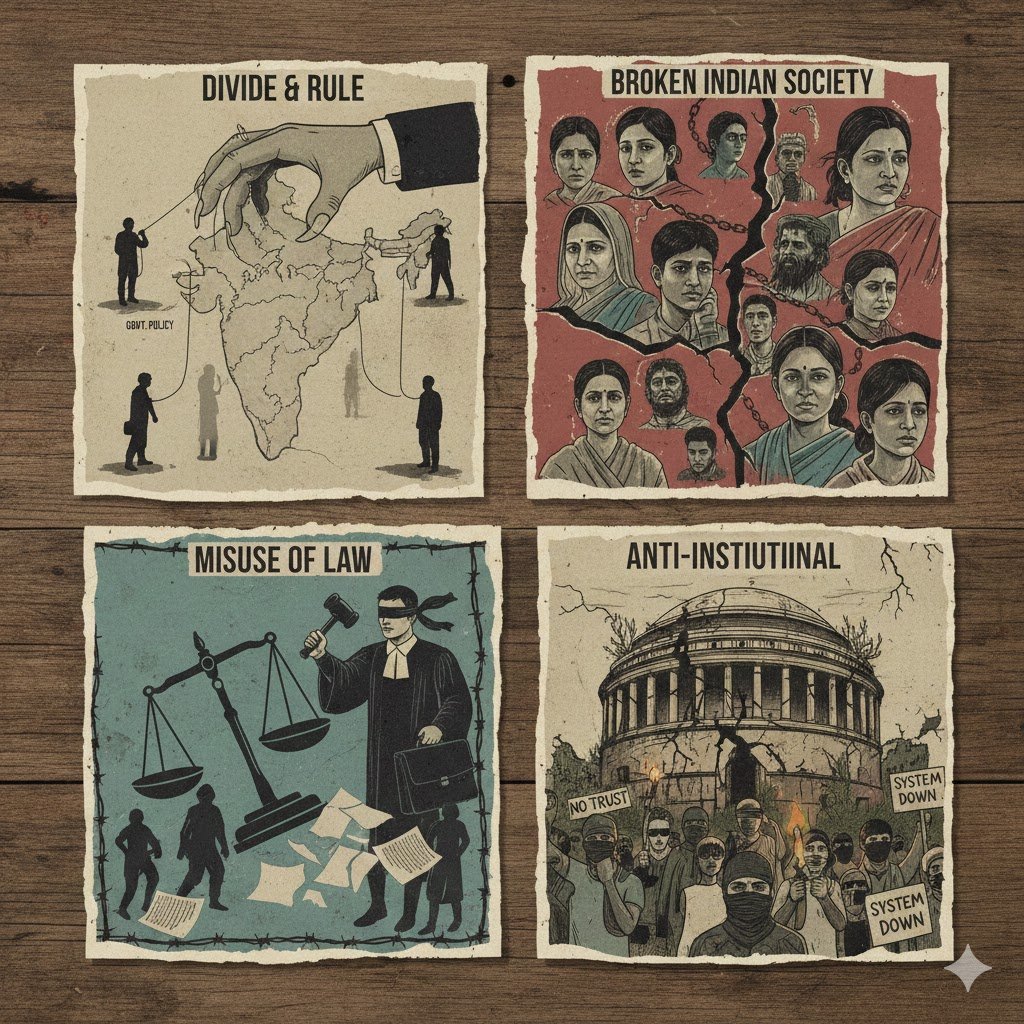
The continued reliance on the General Clauses Act of 1897 is a stark reminder of the colonial influence that still dominates the Indian legal framework. This act was drafted by the British nearly fifty years before India gained independence, yet it remains the foundational “law of laws” for interpreting modern Indian statutes. Using a 19th-century colonial document to interpret 21st-century equity regulations is contradictory. It forces contemporary social justice measures to be filtered through a legal lens designed for a period of imperial rule, which was fundamentally rooted in inequality and administrative control rather than democratic empowerment.
Criticism of the Current Government’s Inaction
The current government has frequently campaigned on the promise of decolonizing Indian laws, yet it has failed to introduce a comprehensive, modern replacement for the General Clauses Act. While there have been high-profile overhauls of criminal laws, this vital “legal dictionary” remains untouched. By failing to create a contemporary equivalent, the government allows a massive gap in legal sovereignty to persist.
The absence of a homegrown statute for the interpretation of rules means that Indian courts and educational bodies are still bound by Victorian-era definitions and linguistic structures. This lack of initiative prevents the creation of a truly indigenous legal philosophy. For a government that emphasizes national identity and the removal of colonial vestiges, leaving the most critical tool of statutory interpretation in its 1897 form is a significant oversight that keeps the Indian legal system tethered to its past.
References
1. Constitution of India, Articles 14, 21, and 22.
2. UGC (Promotion of Equity in Higher Educational Institutions) Regulations, 2012.
3. National Education Policy (NEP) 2020.
4. Maneka Gandhi v. Union of India – Principles of Natural Jusitce
5. State of Madras v. Champakam Dorairajan – the balance of fundamental rights.
6. Dr. Ashok Kumar Makkar, ‘Investigation under Scheduled Castes and Scheduled Tribes (Prevention of Atrocities Act, 1989): Judicial Trends’, Journal of Advances and Scholarly Researches in Allied Education, E-ISSN: 2230-7540, Volume 16, Issue No. 4, Mar 2019, Pages 905 – 917 (12)
7. The Scheduled Castes and Scheduled Tribes (Prevention of Atrocities) Act, 1989
8. Abhinav Sekhri, ‘Article 22 — Calling Time On Preventive Detention’, INDIAN J. CONST. L,
Wibliography
1. “UGC notifies regulations to check caste bias on campuses”, Indian Express, Dt. 14.1.2026, available at: https://indianexpress.com/article/india/ugc-notifies-regulations-to-check-caste-bias-on-campuses-10472107/,
2. Dhruv Mishra, Nupur J Sharma, ‘UGC ‘equity’ Regulation: Explicit bias against ‘general caste’, uncanny similarities with Congress’ Communal Violence Bill, no safeguard for false SC/ST complaints and more’, OpIndia, Dt. 16.1.2026, available at: https://www.opindia.com/2026/01/what-is-promotion-of-equity-in-higher-education-institutions-regulations-announced-by-ugc-bias-against-brahmins-general-castes-no-safeguard-for-false-sc-st-complaints-explained/,
3. Shashank Kumar Dwivedi, ‘Do ‘Equity Squads’ and ‘Equity Ambassadors’ signal inclusion or surveillance? All about new equity regulations of UGC’, Organiser, Dt. 18.1.2019, available at: https://organiser.org/2026/01/18/335535/bharat/do-equity-squads-and-equity-ambassadors-signal-inclusion-or-surveillance-all-about-new-equity-regulations-of-ugc/,
4. ‘’Equity Squads’, ‘Equity Ambassadors’: All About The Latest UGC Notification Driving Outrage On Social Media’, Swarajya, Dt. 15.1.2026, available at: https://swarajyamag.com/news-brief/equity-squads-equity-ambassadors-all-about-the-latest-ugc-notification-driving-outrage-on-social-media,
5. ‘UGC 2026 Rules Target Discrimination In Colleges | Delhi Roads Deadlier Than Ever Before | News9live’ News9live YouTube Channel, available at: https://www.youtube.com/watch?v=Xd4HehlZjn8,
6. Ajihaan, ‘UGC Equity Regulations 2026… घबराहट नहीं, समझ और सुधार की ज़रूरत’, X, Dt. 16.1.2026 available at: https://x.com/AjiHaaan/status/2012071110205149358,
7. M Nageswara Rao, ‘UGC Plays “Equity” Fraud’ X, Dt. 15.1.2026, available at: https://x.com/MNageswarRaoIPS/status/2011831118384021889,
8. Uday Barad, ‘UGC ‘equity’ Regulation’, Facebook, Dt. 16.12026, available at: https://www.facebook.com/uday.barad.54885/posts/ugc-equity-regulation-explicit-bias-against-general-caste-uncanny-similarities-w/933012279408489/,
9. ‘Legal Protections For Scheduled Castes And Scheduled Tribes: Understanding The Framework’, Live Law, Dt. 16.4.2025, available at: https://www.livelaw.in/law-firms/law-firm-articles-/scheduled-castes-scheduled-tribes-civil-rights-rehabilitation-anticipatory-bail-equality-kale-shinde-associates-289541,
10. ‘India’s Lost Talent: Analysing Brain Drain and its Impact’, The Geostrata, Dt. 30.9.2025, available at: https://www.thegeostrata.com/post/india-s-lost-talent-analysing-brain-drain-and-its-impact,
11. Mayashree Acharya, ‘What is Letter of Undertaking: Meaning, Process, Format’, Cleartax, Dt. 21.4.2025, available at: https://cleartax.in/s/letter-of-undertaking,
12. ‘Article 22 of the Indian Constitution’, Social Law Today, Dt. 4.4.2023, https://sociallawstoday.com/article-22-of-the-indian-constitution/,