
Bare Act Provision:
11. Consequences of non-compliance:
If any HEI does not comply with any provisions of these regulations, the Commission shall constitute an enquiry committee to look into the non-compliance. If the non-compliance is established by the enquiry committee set up by the Commission, the HEI shall be:—
(a) Debarred from participating in UGC schemes.
(b) Debarred from offering degree programmes.
(c) Debarred from offering ODL and online mode programmes.
(d) Removed from the list of HEIs maintained under Sections 2(f) and 12B of the UGC Act 1956.
The HEI shall be subjected to one or more of the above actions.
Further, UGC may take additional punitive actions as per the decision of the Commission on case-to-case basis.
MANISH JOSHI, Secy.
[ADVT.-III/4/Exty./619/2025-26]
Explanation:
This regulation acts as the “teeth” of the policy, detailing the severe penalties a Higher Education Institution (HEI) faces if it fails to follow the equity rules.
Establishing Non-Compliance
If a university or college does not follow these regulations, the UGC will form a specific Enquiry Committee. This committee’s job is to investigate the failure. If they find that the school has indeed violated the rules, the UGC can impose one or more of the following four major punishments:
Clause (a): Debarment from UGC Schemes
The institution will be blocked from participating in any UGC-sponsored schemes. This includes losing access to special funding for building women’s hostels, faculty development programs, research grants, and specialized coaching for students. Losing these schemes can significantly lower the quality of facilities and opportunities available at the school.
Clause (b): Debarment from Offering Degree Programmes
This is a very severe penalty. The UGC can stop the institution from granting degrees to its students. This effectively makes the education provided by that school legally unrecognized for employment or further studies, essentially shutting down its core academic function.
Clause (c): Debarment from ODL and Online Programmes
The school will be banned from offering Open and Distance Learning (ODL) or online courses. Many universities rely on these programs to reach a large number of students. Losing this right limits the school’s reach and significantly reduces its revenue and influence.
Clause (d): Removal from Sections 2(f) and 12B of the UGC Act
This is the “death penalty” for an institution’s status. Section 2(f) of UGC Act is what legally defines an institution as a “University” in India. Section 12B of UGC Act makes an institution fit to receive central financial assistance and grants. Being removed from these lists means the institution loses its legal status as a recognized university and is cut off from all government funding.
Additional Punitive Actions
The regulation concludes by stating that the UGC is not limited to just these four penalties. On a case-to-case basis, the Commission can decide to take further “punitive actions”, which could include heavy financial fines, often running into lakhs of rupees, or recommending that the government close the institution entirely if the violations are persistent or extreme.
Here comes the thing which is actually making these regulations against the HEI. For false cases filed under pressure or influence, the person influencing will not be held liable anywhere, but HEI will be held liable for disposing such false cases and corruption associated with these cases, even though decided by the HEI committee on merits.
Conclusion:
The overall conclusion of this analysis is follows:
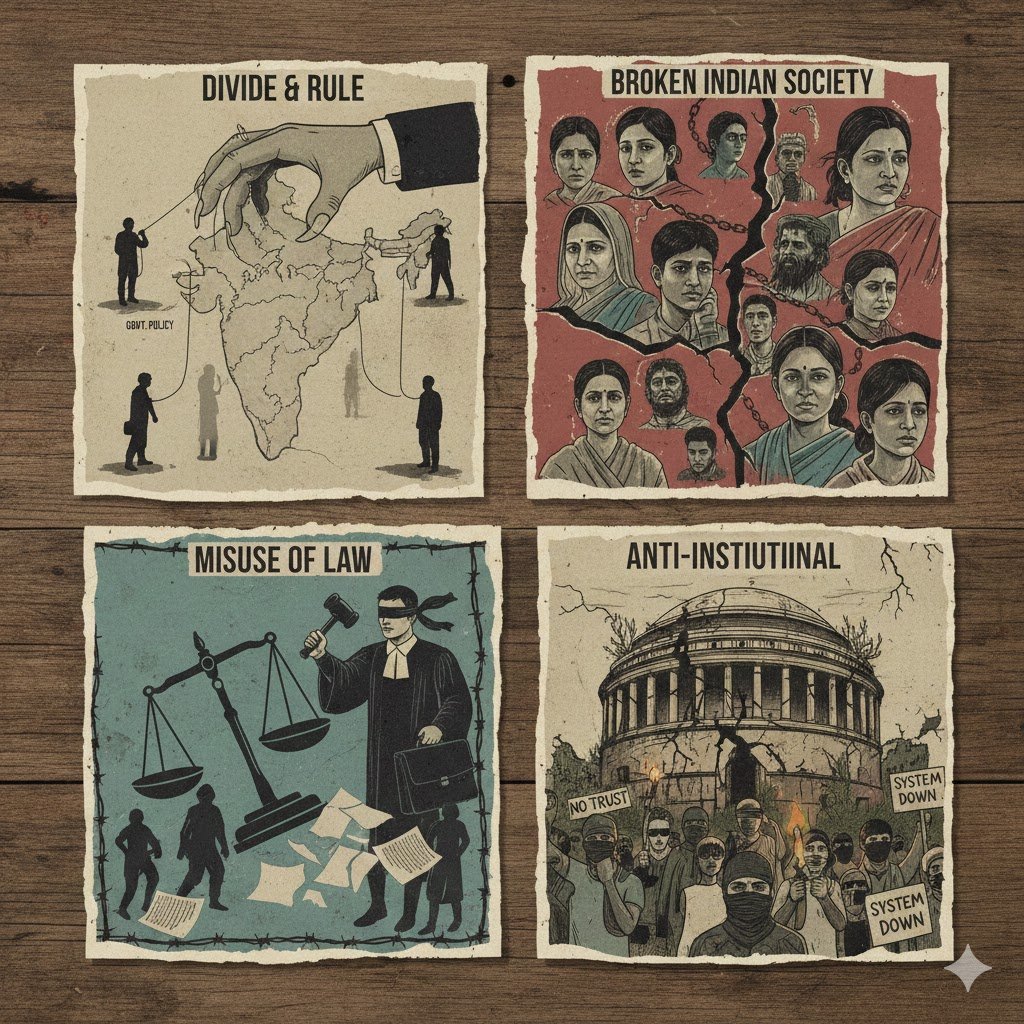
1. Whole regulations are based on the divide and rule policy of British rulers, hence it is harmful for the Constitutional goals of this nation.
2. No representation is provided for general category. This will cause dropout of intelligent students, leading academic loss of student as well as HEI.
3. Too much policing is provided under these regulations, which may create enmity between students who are members of equity squads.
4. No liability is defined in case of false complaints, making this regulation a tool for corruption and harassment. Many illegal benefits will be earned by the certain persons who will misuse these regulations.
Hence HEI as well as all stakeholders shall come forward and oppose this regulations.
References
1. Constitution of India, Articles 14, 21, and 22.
2. UGC (Promotion of Equity in Higher Educational Institutions) Regulations, 2012.
3. National Education Policy (NEP) 2020.
4. Maneka Gandhi v. Union of India – Principles of Natural Jusitce
5. State of Madras v. Champakam Dorairajan – the balance of fundamental rights.
6. Dr. Ashok Kumar Makkar, ‘Investigation under Scheduled Castes and Scheduled Tribes (Prevention of Atrocities Act, 1989): Judicial Trends’, Journal of Advances and Scholarly Researches in Allied Education, E-ISSN: 2230-7540, Volume 16, Issue No. 4, Mar 2019, Pages 905 – 917 (12)
7. The Scheduled Castes and Scheduled Tribes (Prevention of Atrocities) Act, 1989
8. Abhinav Sekhri, ‘Article 22 — Calling Time On Preventive Detention’, INDIAN J. CONST. L,
Wibliography
1. “UGC notifies regulations to check caste bias on campuses”, Indian Express, Dt. 14.1.2026, available at: https://indianexpress.com/article/india/ugc-notifies-regulations-to-check-caste-bias-on-campuses-10472107/,
2. Dhruv Mishra, Nupur J Sharma, ‘UGC ‘equity’ Regulation: Explicit bias against ‘general caste’, uncanny similarities with Congress’ Communal Violence Bill, no safeguard for false SC/ST complaints and more’, OpIndia, Dt. 16.1.2026, available at: https://www.opindia.com/2026/01/what-is-promotion-of-equity-in-higher-education-institutions-regulations-announced-by-ugc-bias-against-brahmins-general-castes-no-safeguard-for-false-sc-st-complaints-explained/,
3. Shashank Kumar Dwivedi, ‘Do ‘Equity Squads’ and ‘Equity Ambassadors’ signal inclusion or surveillance? All about new equity regulations of UGC’, Organiser, Dt. 18.1.2019, available at: https://organiser.org/2026/01/18/335535/bharat/do-equity-squads-and-equity-ambassadors-signal-inclusion-or-surveillance-all-about-new-equity-regulations-of-ugc/,
4. ‘’Equity Squads’, ‘Equity Ambassadors’: All About The Latest UGC Notification Driving Outrage On Social Media’, Swarajya, Dt. 15.1.2026, available at: https://swarajyamag.com/news-brief/equity-squads-equity-ambassadors-all-about-the-latest-ugc-notification-driving-outrage-on-social-media,
5. ‘UGC 2026 Rules Target Discrimination In Colleges | Delhi Roads Deadlier Than Ever Before | News9live’ News9live YouTube Channel, available at: https://www.youtube.com/watch?v=Xd4HehlZjn8,
6. Ajihaan, ‘UGC Equity Regulations 2026… घबराहट नहीं, समझ और सुधार की ज़रूरत’, X, Dt. 16.1.2026 available at: https://x.com/AjiHaaan/status/2012071110205149358,
7. M Nageswara Rao, ‘UGC Plays “Equity” Fraud’ X, Dt. 15.1.2026, available at: https://x.com/MNageswarRaoIPS/status/2011831118384021889,
8. Uday Barad, ‘UGC ‘equity’ Regulation’, Facebook, Dt. 16.12026, available at: https://www.facebook.com/uday.barad.54885/posts/ugc-equity-regulation-explicit-bias-against-general-caste-uncanny-similarities-w/933012279408489/,
9. ‘Legal Protections For Scheduled Castes And Scheduled Tribes: Understanding The Framework’, Live Law, Dt. 16.4.2025, available at: https://www.livelaw.in/law-firms/law-firm-articles-/scheduled-castes-scheduled-tribes-civil-rights-rehabilitation-anticipatory-bail-equality-kale-shinde-associates-289541,
10. ‘India’s Lost Talent: Analysing Brain Drain and its Impact’, The Geostrata, Dt. 30.9.2025, available at: https://www.thegeostrata.com/post/india-s-lost-talent-analysing-brain-drain-and-its-impact,
11. Mayashree Acharya, ‘What is Letter of Undertaking: Meaning, Process, Format’, Cleartax, Dt. 21.4.2025, available at: https://cleartax.in/s/letter-of-undertaking,
12. ‘Article 22 of the Indian Constitution’, Social Law Today, Dt. 4.4.2023, https://sociallawstoday.com/article-22-of-the-indian-constitution/,