

This article explores the major doctrines shaping administrative authority, drawing from landmark Supreme Court judgments, in a way that highlights their practical implications and historical development.
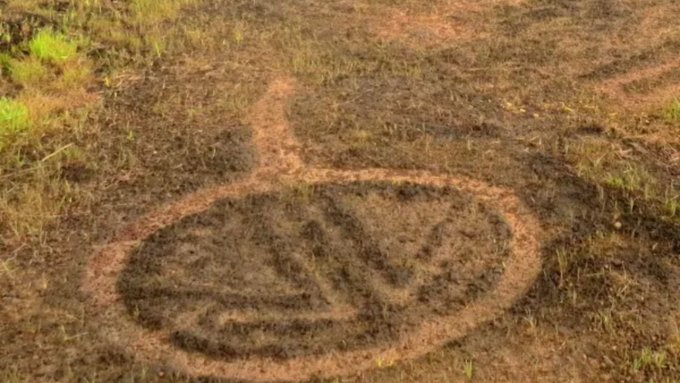
AMASRA: 2.16 Section 13. Acquisition of protected monuments.
2.16 Acquisition of protected monuments: 2.16.1 Bare Act Provision: 13. Acquisition of protected monuments.―If the Central Government apprehends that a protected monument is in danger of being destroyed, injured, misused, or allowed to fall into decay, it may acquire the protected monument under the provisions of the Land Acquisition Act, 1894 (1 of 1894), as […]
Administrative Accountability in India: Mechanisms, Laws, and Challenges
Introduction Administrative accountability forms the cornerstone of effective governance in any democratic nation, ensuring that public officials remain answerable for their actions and decisions. In Bharat, a country with a vast bureaucratic apparatus, this concept is vital to prevent abuse of power, foster transparency, and build public trust. It involves mechanisms that hold administrators responsible […]
Administrative Accountability in India: Mechanisms, Laws, and Challenges
Introduction Administrative accountability forms the cornerstone of effective governance in any democratic nation, ensuring that public officials remain answerable for their actions and decisions. In Bharat, a country with a vast bureaucratic apparatus, this concept is vital to prevent abuse of power, foster transparency, and build public trust. It involves mechanisms that hold administrators responsible […]
AMASRA: 2.15 Section 12. Purchasers at certain sales and persons claiming through owner bound by instrument executed by owner.
2.15 Purchasers at certain sales and persons claiming through owner bound by instrument executed by owner: 2.15.1 Bare Act Provision: 12. Purchasers at certain sales and persons claiming through owner bound by instrument executed by owner.―Every person who purchases, at a sale for arrears of land revenue or any other public demand, any land on […]
AMASRA: 2.13 Section 10. Power to make order prohibiting contravention of agreement under section 6.
2.13 Power to make order prohibiting contravention of agreement under section 6 2.13.1 Bare Act Provision: 10. Power to make order prohibiting contravention of agreement under section 6.―(1) If the Director-General apprehends that the owner or occupier of a protected monument intends to destroy, remove, alter, deface, imperil or misuse the monument or to build […]
AMASRA: 2.8 Section 5. Acquisition of rights in a protected monument.
2.8 Acquisition of rights in a protected monument 2.8.1 Bare Act Provision: PROTECTED MONUMENTS 5. Acquisition of rights in a protected monument.―(1) The Director-General may, with the sanction of the Central Government, purchase, or take a lease of, or accept a gift or bequest of, any protected monument. (2) Where a protected monument is without […]
AMASRA: 2.7 Section 4A. Categorisation and classification in respect of ancient monuments or archaeological sites and remains declared as of national importance under sections 3 and 4.
2.7 Categorisation and classification in respect of ancient monuments or archaeological sites and remains declared as of national importance under sections 3 and 4 2.7.1 Bare Act Provisions: 1[4A. Categorisation and classification in respect of ancient monuments or archaeological sites and remains declared as of national importance under sections 3 and 4.―(1) The Central Government […]